Cribbage - Card Game
Topy GamesCard
4.61.98K Reviews
- Version
- 2.9
- Installs
- 500.00K
- Age Rating
- Everyone
Screenshots
Our Review of Cribbage - Card Game
 Analysis by Appyee
I enjoy card games that reward a good decision without demanding a long evening, and Cribbage - Card Game from Topy Games fits that space well. It is a free card game built around the classic cribbage format, where the interesting part is not simply drawing strong cards but deciding what to keep, what to discard, and how much risk to accept. After spending time with it, I found that its biggest strength is how clearly it turns a traditional tabletop game into short, repeatable sessions.
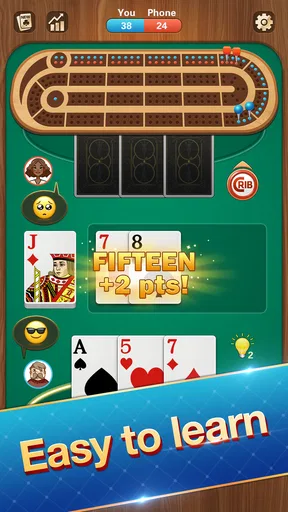
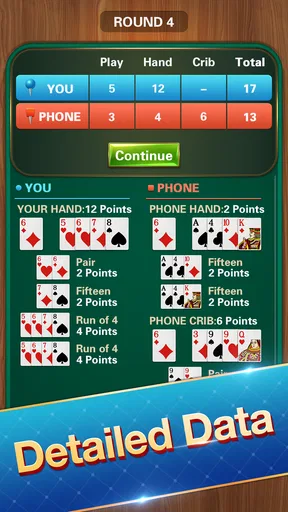
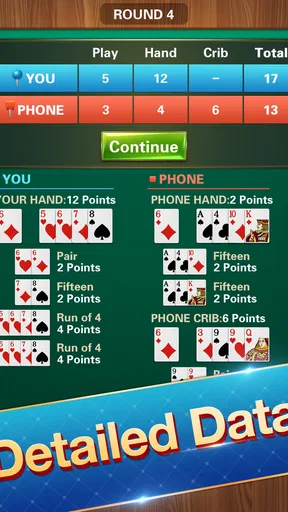
The central capability here is the digital handling of cribbage’s scoring and turn flow. That sounds modest, but it changes the experience considerably. In a physical game, I may enjoy the cards while still needing to remember scoring patterns, count hands correctly, and keep track of the board. This version takes care of that bookkeeping so I can concentrate on the decisions. The app is at its best when it removes calculation friction without removing the strategic tension.
It belongs to the card-game category, carries an Everyone age rating, and is free to install. Topy Games has kept the presentation focused on the game itself rather than surrounding it with unrelated content. The app has reached over 500 thousand installs and holds an average rating of 4.6 from around 12 thousand ratings, which suggests that its straightforward approach connects with a substantial audience.
Why the scoring assistant matters more than it first appears
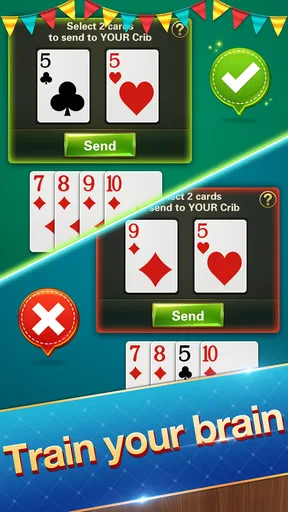
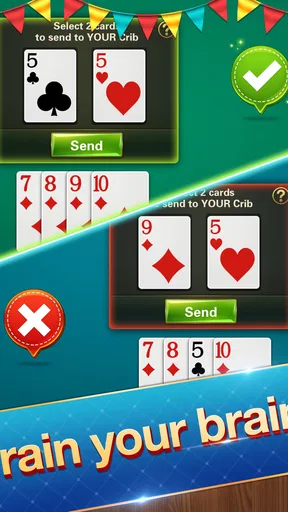
Cribbage is easy to describe but surprisingly rich in small choices. Players build hands, place cards during play, and score combinations such as pairs, runs, and totals that reach the target without exceeding it. The distinctive decision arrives when cards are placed into the crib. Those cards may help the opponent, so discarding is not just a way to improve my own hand; it is also an exercise in limiting what I give away.
On a table, that process involves physical cards, a scoring board, and enough familiarity to avoid mistakes. In this app, the digital format makes the sequence easier to follow. I can focus on whether a discard creates a flexible hand, whether a tempting pair is too valuable to surrender, or whether a safer choice is better because the opponent may benefit from the crib. The game remains strategic because the app handles the arithmetic rather than the judgment.
This is particularly useful for people who know the broad idea of cribbage but hesitate over the details. A digital score display gives the session a smoother rhythm, while the familiar rules still leave room for learning through repetition. I found that a new player can gradually recognize patterns by seeing how different hands are valued, instead of stopping every few minutes to check a manual.
What a typical hand feels like
A session usually becomes a chain of compact decisions. I begin by looking at the cards in hand and considering which combination has the best chance of scoring. A hand with cards close together may offer a run, while matching values can create pairs. Cards that work in several ways are often more useful than a hand that looks impressive for only one possible combination.
The discard is where the app’s main strength becomes most noticeable. I have to separate immediate value from potential value. Keeping a pair may look obvious, but breaking it can sometimes create a stronger mixture of totals and runs. Sending an attractive card to the crib may improve my own hand, yet it also gives the opponent a possible scoring opportunity. These are not dramatic choices, but they are exactly the small trade-offs that make cribbage satisfying.
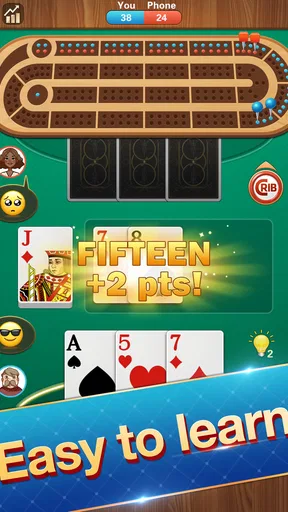
During play, the running total creates another layer of caution. A card that seems useful can become awkward if it pushes the count too high, while a low card may preserve more options for the next turn. I like that the digital format keeps this part readable. Instead of spending attention on physical counting, I can think about timing, pairing an opponent’s card, or avoiding a total that lets the other player score easily.
The scoring stage is also where beginners can gain confidence. Rather than treating every hand as a puzzle with an intimidating answer, I can use the result as feedback. Over several sessions, I start noticing why certain combinations matter and why a visually attractive hand is not always the most valuable one. That learning loop is more useful than a simple tutorial that explains rules once and then leaves the player alone.
A practical routine for improving decisions
My most useful approach is to pause briefly before discarding and ask three questions. First, which cards currently work together? Second, which card would be most dangerous to give away? Third, am I choosing a high-scoring hand or merely a hand that looks neat? This routine prevents the common beginner mistake of keeping cards based on appearance rather than flexibility.
I also recommend paying attention to cards that serve multiple roles. A card near several values can contribute to a run, support a useful total, or combine with a later draw. That flexibility can be more valuable than holding two cards that only work together in one narrow pattern. The app makes this kind of practice convenient because I can play another hand immediately and test whether my reasoning was sound.
One less obvious benefit is that short digital sessions make experimentation easier. In a physical match, I may avoid a risky discard because I do not want to slow the table down while thinking. Here, I can deliberately choose a defensive discard in one hand and a more aggressive one in the next, then compare how each style feels. That turns casual play into a low-pressure way to understand cribbage strategy.
The best everyday use for this version
The strongest scenario is a short break when I want more involvement than a passive puzzle but less commitment than a long board game. A quick session can fit between errands, during a quiet commute when playing safely is practical, or at the end of the day when I want something focused. The structure gives each hand a clear purpose, so I do not need to prepare a large play space or find another person immediately.
It also works well for someone returning to cribbage after years away. The physical game can be difficult to restart when the scoring details have become rusty. A digital version provides a gentler route back in: I can concentrate on the decisions, let the interface keep the score organized, and rebuild familiarity through repeated hands.
For families, the Everyone rating makes it suitable for a broad audience, although younger players may still need an adult to explain the rules and the idea of discarding to the crib. The game is not built around flashy action, so its appeal depends on whether the player enjoys thinking through cards. That makes it a better choice for a quiet shared activity than for children looking for constant visual stimulation.
I can also see value for experienced players who want a practice table rather than a replacement for face-to-face play. The app is convenient when no opponent is available, and the short format makes it easy to work on one specific weakness, such as overvaluing pairs or ignoring defensive discards. It does not recreate the social atmosphere of sitting across from a friend, but it does preserve the core decision-making.
Where it compares favorably with other card games
Compared with solitaire-style games, this one gives my choices more lasting consequences. In solitaire, the main challenge is often finding a legal sequence or recovering from a poor layout. Cribbage adds an opponent, a shared rhythm, and the question of whether a move helps me while quietly helping someone else even more. That makes the experience feel less like arranging cards and more like managing incomplete information.
Compared with fast multiplayer card games, it is calmer and more deliberate. There is less pressure to react instantly, and the pleasure comes from reading combinations and weighing risk. If I want quick animation, constant competition, or a large social component, another card game may suit me better. If I want a traditional ruleset with meaningful choices packed into a compact format, this is a stronger match.
It also differs from a physical cribbage set in a very specific way: the app is more convenient but less tactile. I do not get the feel of dealing cards, moving pegs, or teaching someone across a table. In exchange, I avoid setup, misplaced pegs, and manual scoring. For solo practice and casual repetition, that trade is worthwhile. For a weekend gathering, the physical set may still be the better centerpiece.
Trade-offs that affect the long-term experience
The simplicity that makes the app approachable can also limit its appeal for players who expect a large collection of modes or deep customization. Cribbage itself supplies much of the variety through different hands and decisions, but the experience remains centered on that one traditional game. Someone looking for multiple card variants in one download should consider a broader collection instead.
The game’s reliance on chance is another important consideration. Good decisions improve the quality of play, but they cannot guarantee a favorable hand. A player may make a sensible discard and still lose because the opponent receives better combinations or the next cards do not cooperate. I appreciate that uncertainty because it belongs to cribbage, but people who prefer outcomes determined almost entirely by planning may find it frustrating.
There is also a learning curve around scoring. The app can make the process easier to follow, but it cannot instantly make every combination intuitive. At first, I sometimes knew that a hand was valuable without understanding exactly why. That is normal for cribbage, yet it means the best experience comes from treating early matches as practice rather than expecting immediate mastery.
The free price lowers the barrier to trying it, while optional in-app purchases range from $1.99 to $6.99 per item. I would approach those purchases carefully and decide whether they add enough value to my personal routine before spending. The core reason to install the game is the cribbage experience itself, so I would not recommend buying anything simply because a session happens to go badly.
Device compatibility is reasonably broad for an older Android phone, since the game requires Android 8.0 or later. That makes it accessible to people who do not use a recent handset. The current version is 2.9, so I would still keep the app updated when possible, especially if the store offers a newer build for the device. On a small screen, card choices and scoring information deserve a little extra attention, particularly for players with less familiar eyesight.
When I would choose something else
I would skip this app if my main goal were a lively online community, voice chat, or a highly social match. Its value comes from the card decisions and the convenience of solo digital play, not from recreating a noisy game night. I would also look elsewhere if I wanted a collection containing poker, rummy, solitaire, and several other formats rather than a focused cribbage experience.
A physical board is the better option when teaching a group and creating a shared ritual matters more than speed. Passing cards, discussing a discard, and physically moving along the board are part of the charm. This app is more appropriate when I am alone, short on time, or trying to practice without asking another person to sit through my mistakes.
Finally, players who dislike luck-driven games should know what they are choosing. The strategic layer is real, but it operates inside chance. I can improve my decisions, reduce avoidable errors, and think more defensively, yet I cannot control every draw. Accepting that balance is essential to enjoying the game rather than judging every loss as a failure.
Who gets the most from the focused design
The best audience is someone who wants a traditional card game that is easy to start but capable of rewarding careful thought. Beginners gain a manageable way to learn the flow, returning players get convenient practice, and experienced players can use short sessions to test different approaches to discarding and risk. The free entry point makes it sensible to try before deciding whether the format suits your taste.
I especially recommend it to people who enjoy games where the important move is often the quiet one. The most satisfying moments are not spectacular effects or complicated menus. They are the decisions that look ordinary until the score reveals their value: keeping a flexible card, refusing to feed the crib, or choosing a safe play when a flashy option could backfire.
Players should install it with the right expectations. This is not a broad entertainment hub, and it does not replace the social warmth of a physical board. It is a focused digital table for cribbage, with the advantage of automatic organization and the limitation of a narrower scope. That focus is exactly why it works for me when I want a thoughtful break rather than a large game to explore.
After using it, my recommendation is positive, especially for anyone curious about cribbage or already familiar with the rules. Topy Games has chosen a practical direction: keep the classic decisions intact, make the scoring easier to manage, and let the player spend more time thinking about the hand. If you want a compact card game where smart discards matter as much as lucky draws, this is a worthwhile free starting point.
In the end, Cribbage - Card Game succeeds because its main capability is not flashy; it is useful. By taking care of the bookkeeping, it exposes the part of cribbage I find most rewarding: judging risk with imperfect information. That makes it a good companion for short practice sessions and a convenient alternative when a physical opponent is unavailable, while still leaving enough depth for me to keep refining my choices.
Verdict
Strengths of Cribbage - Card Game
- Clear scoring system makes each hand easy to follow.
- Playable offline, making it useful during travel or commutes.
- Several difficulty levels suit both casual and experienced players.
- Quick rounds fit well into short gaming sessions.
- Simple interface keeps the focus on cards and strategy.
Limitations of Cribbage - Card Game
- Ads may interrupt play unless removed through an in-app purchase.
- Advanced players may find the computer opponents predictable.
- Limited customization can make long-term play feel repetitive.
- Mistakes in pegging can be costly for newcomers to learn.
- Some features may require an internet connection or extra payment.
Other Releases by Topy Games
View All

Spelling Quiz - Word Trivia
Word4.8

Trivia Master - Word Quiz Game
Trivia4.5

Gin Rummy: Classic Card Game
Card4.9
Similar Picks in This Category
View All
Solitaire - Classic Card Games
MobilityWare4.6

UNO!™
Mattel163 Limited4.3

Spider Solitaire: Card Games
MobilityWare4.6

Solitaire.com - Classic Cards
Tripledot Studios Limited4.7

Plants vs. Zombies™ Heroes
ELECTRONIC ARTS4.1

Hearthstone
Blizzard Entertainment, Inc.4.1
Frequently Asked Questions
What is Cribbage - Card Game, and how is it played?
Cribbage - Card Game is a digital version of the classic two-player card game in which players score points by creating combinations such as pairs, runs, and fifteens. During a typical round, you choose cards for your hand, place some into the crib, and score both the play phase and the final hands. A built-in board makes the scoring easier to follow.
Can I play Cribbage - Card Game offline?
In most versions, Cribbage - Card Game can be played without a continuous internet connection, which makes it convenient for travel or quick matches away from Wi-Fi. Offline availability can depend on the specific edition and device, so it is worth checking the app listing before downloading. Online features, advertisements, updates, and leaderboards may still require an internet connection.
Does the game include different difficulty levels or computer opponents?
Yes, the game is generally designed to support matches against computer-controlled opponents, making it suitable for both beginners and experienced cribbage players. Difficulty settings may change how strategically the opponent selects cards and plays combinations. New players can use easier settings to learn the rules, while stronger opponents provide a more demanding challenge once the basic scoring system becomes familiar.
Is Cribbage - Card Game suitable for beginners who do not know the rules?
It can be a good starting point, although cribbage has several scoring details that may take time to understand. Most digital versions provide instructions, explanations, or automatic score calculation for combinations, which reduces the chance of mistakes. Beginners should pay particular attention to the crib, the starter card, and the difference between scoring during play and scoring after all cards have been revealed.
Are there advertisements, in-app purchases, or privacy concerns to consider?
The exact monetization model depends on the developer and the version available for your Android or iOS device. Some editions are free with advertisements, while others may offer paid upgrades to remove ads or unlock additional options. Before installing, review the store listing for in-app purchase details, requested permissions, and the developer’s privacy information, especially if you prefer a simple offline experience.
Play our best games!


